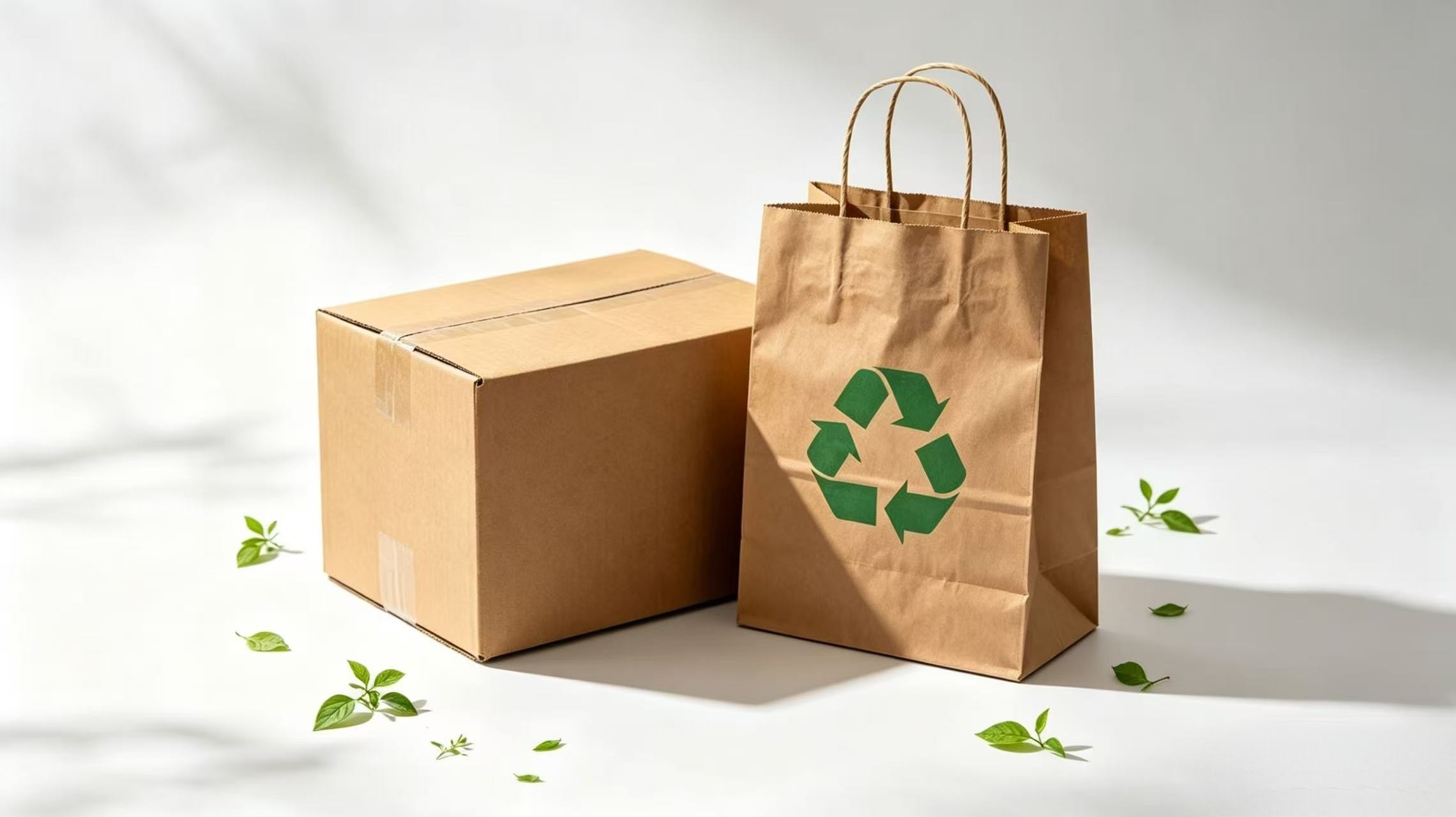
European Union: The New PPWR Framework
The EU’s revised Packaging and Packaging Waste Regulation (PPWR) entered into force in early 2026, replacing the previous directive. Unlike a directive, a regulation is directly applicable in all 27 member states without needing national implementation laws. Key points for packaging exporters include:
- All packaging placed on the EU market must be designed for recycling by 2030, with interim targets starting now. Paper-based packaging must not contain substances that inhibit recycling (e.g., certain wet-strength resins or non-removable adhesives).
- Heavy metals and hazardous substances: Total concentration of lead, cadmium, mercury, and hexavalent chromium must not exceed 100 ppm.
- Labeling: Packaging must include a sorting label with a pictogram indicating whether the material is recyclable, compostable, or reusable. For paper bags and boxes, the label often features the “paper” recycling symbol with a clear instruction to dispose of in paper waste.
- Registration: Producers (including non-EU exporters who sell directly to EU consumers or businesses) may need to appoint an authorized representative and register in each member state’s packaging registry, though in practice most compliance falls on the EU-based importer. However, contracts should clearly assign responsibility.
Exporters should also be aware that Italy, Spain, and France have added national requirements on top of the PPWR. France, for example, bans the printing of receipts on paper containing bisphenol A (BPA) and requires the Triman logo on all packaging sold to French consumers.
United Kingdom: Extended Producer Responsibility (EPR) for Packaging
Post-Brexit, the UK operates its own packaging waste system. Since 2024, the EPR for packaging has shifted more costs to producers (including overseas sellers who do not have a UK-established entity). For packaging exporters, the practical implication is that UK buyers will increasingly demand evidence that the packaging they purchase complies with UK recycling standards. The key requirements are:
- Packaging must be clearly labeled with recycling information. The UK uses the “Recycle” or “Do Not Recycle” labels based on OPRL (On-Pack Recycling Label) guidelines.
- Paper packaging with less than 5% plastic coating is generally accepted as recyclable. However, plastic-coated paper bags (e.g., for frozen food) must be labeled as “Check Local Recycling” because not all UK councils accept them.
- Exporters are advised to provide technical data sheets showing the percentage of recycled content and the absence of problematic materials like oxo-degradable plastics (banned in the UK).
United States: State-Level Regulations and FTC Green Guides
Unlike the EU, the US has no federal packaging waste law. Instead, packaging exporters must navigate a patchwork of state laws, plus federal guidance on environmental marketing claims. The most important developments in 2026 are:
- California’s Plastic Pollution Prevention and Packaging Producer Responsibility Act (SB 54) now requires that all single-use packaging and plastic foodware sold in California be recyclable or compostable by 2032, with checkpoints every two years. Paper bags are exempt from the plastic reduction target but must meet recyclability criteria.
- Colorado, Oregon, and Maine have also enacted EPR laws for packaging, requiring producers to join a producer responsibility organization (PRO) and pay fees based on packaging volume and recyclability.
- The FTC is currently revising its Green Guides, with a draft expected in late 2026. However, current guidance remains that terms like “recyclable” and “compostable” must be substantiated and not used in a misleading way. For paper packaging, claiming “recyclable” is generally acceptable if recycling facilities for that material exist for 60% of the population where the product is sold — a high bar that many exporters overlook.
Australia: ARL and APCO Requirements
Australia’s mandatory packaging design standards, enforced via the Australian Packaging Covenant Organisation (APCO), require that packaging be assessed against the ARL (Australasian Recycling Label). For paper bags and boxes:
- Uncoated paper and cardboard are widely accepted as recyclable and can display the “Recyclable” ARL logo.
- Coated paper (e.g., with wax or polyethylene) is often categorized as “Check Locally” and may need to be redesigned.
Exporters selling to Australian retailers like Coles or Woolworths must provide APCO-compliant packaging reports, including details on recycled content and recyclability assessments.
Certifications That Matter in 2026
Beyond regulatory compliance, certifications have become practical passports for market access. The most requested by international buyers include:
- FSC (Forest Stewardship Council): Nearly mandatory for packaging sold to European or North American retailers that have sustainable sourcing policies. FSC Mix or FSC Recycled are both accepted.
- GRS (Global Recycled Standard): Growing in importance for buyers who want verified recycled content, especially for paper bags with post-consumer waste.
- BPI (Biodegradable Products Institute) / OK Compost: Required for any compostable claims in the US and EU, respectively. Without these certifications, claiming “compostable” can trigger legal action under consumer protection laws.
- ISO 14001: While not product-specific, this environmental management certification reassures buyers about a supplier’s overall sustainability governance.
Practical Steps for Exporters
For independent packaging factories and trading companies, achieving full compliance can seem daunting. However, a practical approach includes:
- First, map your buyer’s country and region. A box sold to Germany faces different rules than the same box sold to Texas.
- Second, request material declarations from your raw material suppliers, especially for recycled fiber percentage, adhesive types, and coatings.
- Third, invest in third-party testing for heavy metals and restricted substances. A single test report can serve multiple markets if properly designed.
- Fourth, work with a compliance consultant or legal partner if exporting to multiple EU countries or the US for the first time. The cost of a rejected shipment far exceeds consulting fees.
- Finally, remember that compliance is a marketing advantage. Transparently publishing your certifications and regulatory alignment on your website and in your quoting process can shorten sales cycles and justify premium pricing.
As 2026 progresses, packaging compliance will only become more layered. Exporters who treat it not as a burden but as a strategic differentiator will protect their shipments, build trust with overseas clients, and avoid the costly surprise of a container stuck at customs with non-compliant labels — or worse, non-compliant materials.
 EN
EN